
For decades analysts and policymakers have tried to understand mortgage performance by staring at national aggregates – national home price indices, national unemployment rates. national delinquency curves. These measures are tidy and convenient, but they tell us remarkably little about the forces that actually push a household into default. National models cannot succeed, because mortgage default risk is primarily driven by local factors, not national influences.
The problem is simple:
people live in places, not in national averages
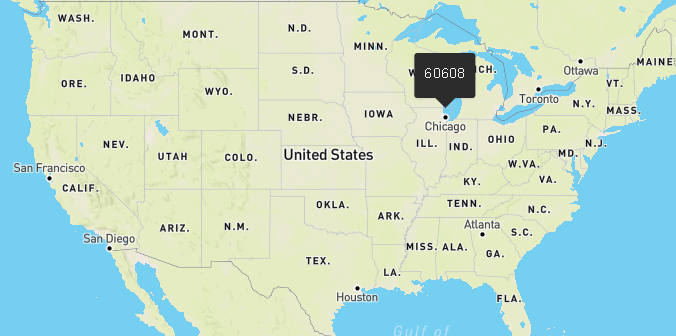
Capozza & coauthors made this point forcefully in the 1990’s, and the evidence has only grown stronger since. Mortgage default is not a national event. It is a profoundly local one, shaped by the economic fortunes of neighborhoods, cities, and metropolitan regions.
Local Conditions Drive Borrower Behavior
Borrowers do not experience the “U.S. economy.” They respond to the economy they see from their front porch:
- They lose their job when their employer downsizes — not when the national employment rate ticks up.
- They watch their neighborhood’s home values fall – the the national composite.
- They feel the effects of their city’s population inflows our outlfows — not national migration trends.
- They confront their local housing supply constraints – not the national construction cycle.
Default is almost always triggered by a shock that is local, personal and spatially concentrated: a plant closure, a neighborhood price decline, a weakening rental market, or a shift in local demand.
CKT show that even within a single state, default rates can diverge dramatically. A borrower in Detroit and a borrower in Ann Arbor may look identical on paper, but they inhabit different economic universes. The mortgage market is not one national market – it is a mosaic or local markets, each with its own dynamcis.
National Models Miss Turning Points
National models fail for the same reason national averages fail to describe cities: aggregation hides the action.
When we average local markets together:
- A sharp downturn in one metro is washed out by stability elswhere
- Early warning signals disappear into the national mean
- Local price cycles are flattened beyond recognition
- Local employment shocks are buried
- Spatial clusters of negative equity vanish
National models are built to detect synchronized national movements. But housing markets rarely move in unison. The result is predictable: national models miss the turning points that matter most.
Local Markets Are Heterogeneous by Design
Cities differ because their economic foundations differ. CKT highlight several structural forces that make local housing markets behave differently:
- Housing supply elasticity varies dramatically across metros
- Industry concentration creates localized employment risk
- Income volatility differs across regions and occupations
- Migration flows reshape demand at the ZIP‑code level
- Price cycles differ in amplitude and duration
These differences create persistent cross‑market variation in default risk. Two borrowers with identical FICO scores and LTVs can face radically different default probabilities simply because they live in different cities.
Urban economics teaches us that place matters. Mortgage performance is no exception.
The Implication: Mortgage Risk Must Be Modeled Locally
Once we acknowledge that default is local, the modeling implications becoem unavoidable:
- PD models must incorporate local price cycles, not national indices
- Surveillance systems must track local economic indicators
- Stress scenarios must include geographically heterogeneous shocks
- Pricing and credit policy must reflect local volatility
- Regulators must monitor localized pockets of vulnerability
This is the intellectual foundation for geographically granular risk tools—such as UFA’s ForeScore Data—which quantify neighborhood-level economic resilience and capture the spatial clustering of default risk.
The Big Takeaway
In summary, CKT’s work reframes how we think about mortgage risk. The national lens is not merely incomplete—it is misleading. To understand mortgage default, we must understand local markets, because that is where the economic forces shaping borrower behavior actually operate.