Housing markets move independently across regions. Explore how local economic conditions influence mortgage default and prepayment risk over time.
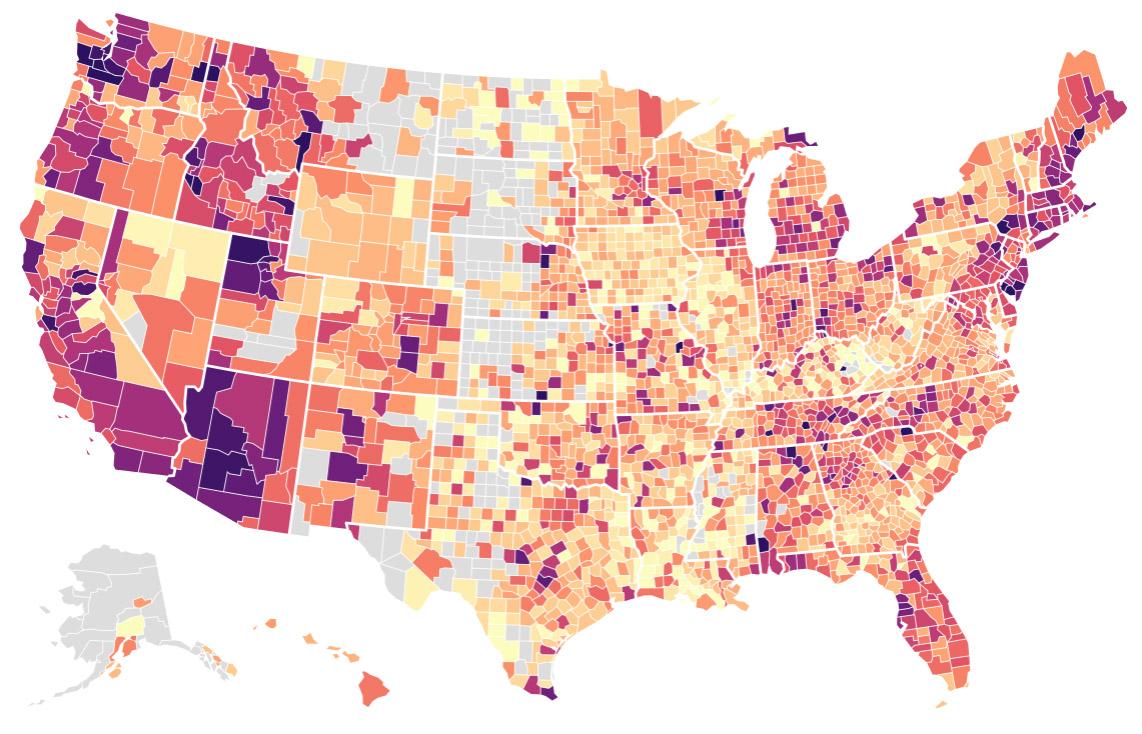
Mortgage performance is shaped by far more than borrower credit scores and property values. Local housing markets experience unique economic cycles, demographic shifts, and supply-demand dynamics that can significantly influence default and prepayment behavior. Understanding these regional differences allows lenders to make more informed decisions and better manage portfolio risk.
Housing markets rarely move in unison. While one metropolitan area may experience strong home price appreciation and job growth, another may face declining employment, slowing demand, or increasing housing inventory. These local variations directly affect borrower stability and the long-term performance of mortgage loans.
Relying solely on national housing trends can mask important regional risks that emerge well before they appear in broader market data.
Several local economic indicators influence whether borrowers are likely to meet their mortgage obligations or refinance their loans. These include:
Together, these factors create distinct market conditions that impact both mortgage default and prepayment rates.
Mortgage defaults often increase when local economies weaken. Rising unemployment, declining property values, or slowing economic activity can place financial pressure on homeowners, making it more difficult to maintain mortgage payments.
Monitoring forward-looking local indicators helps lenders identify markets where default risk may be increasing before delinquency rates begin to rise.
Prepayment risk is equally influenced by local market conditions. Borrowers may refinance or sell their homes due to rising property values, improving financial circumstances, relocation, or favorable interest rates. In contrast, weaker housing markets often experience lower refinancing activity and longer loan durations.
Accurately forecasting prepayment behavior enables lenders to improve cash flow projections, asset valuation, and portfolio planning.
Traditional mortgage models typically focus on borrower characteristics and historical performance. Adding predictive local housing intelligence provides valuable context about where markets are heading rather than simply where they have been.
Forward-looking regional forecasts allow lenders to:
Successful mortgage portfolio management depends on understanding both borrower-level risk and the economic environment surrounding each property. By incorporating predictive insights into local housing market trends, lenders gain a clearer view of future opportunities and potential challenges.
As housing markets continue to evolve independently across regions, institutions that leverage forward-looking location intelligence will be better positioned to reduce risk, improve portfolio performance, and make more confident lending decisions.